
IT’S NOT THE CALL, IT’S THE CALLER
Way back in the early days of learning how to hunt wild turkeys a well-known southern turkey hunter warned me, “It’s not the call that makes for a successful hunt, it’s the caller.” It doesn’t take special knowledge to strum a guitar but very few have put in the massive amounts of practice time to match licks with Jimmy Hendrix or Chet Atkins. The same is true when it comes to imitating wild turkey vocabulary.
A hunter can spend a small fortune on calling devices until he or she gets one that comes close to sounding like a real wild turkey. When the piggy bank is almost empty a lightbulb should light up over your head and understand what that old-timer was telling me back in the early 1970’s. “It”s not the call, it’s the caller” meaning the person running the call.
A hunter cam buy the cheapest turkey call on the market and kill a turkey with it. Heck, I’ve killed turkeys using a juice box straw and another with the stem from my corncob pipe and still more with the cleaned out barrel of a ballpoint pen. Every time I go out to eat with my wife she immediately grabs that tiny little straw that stirs my cocktail. She knows i can’t resist running a few yelps.
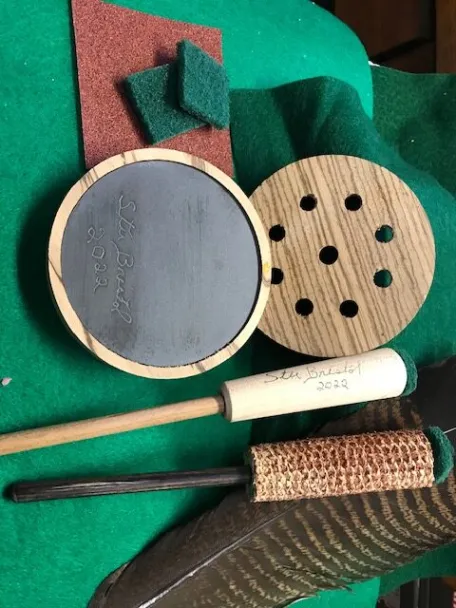
Even today i often use just the 3-inch slate or aluminum sound board from one of my pot calls to kill turkeys.
Turkey hunters need to understand that call makers and the more successful wild turkey hunters have the imprint of each and every turkey call or vocalization in their heads. How and when that vocabulary plants itself into the hunters brain will determine future success.
Back in the day I would spend hours sitting in the back forty with a turkey call and a small tape recorder. I would run a series of calls up close then walk away calling then play back my turkey music time and again until I thought I had it right. other times were spent in the off season when turkeys were less wary and i would tape record their different vocalizations.
My turkey speak education was along the same curriculum as learning to speak proper English back in Kindergarten and all through my schooling. It was a lot of years before I was proficient enough to sell my weekly outdoor columns and magazine articles. Rejection after rejection made me work harder to get it right . . . to produce what editors wanted.
So it was in my schooling of turkey talk. Rejection was a way of life for me when it came to talking turkey with the real thing. I could fool a few of them and some i outright ambushed out of frustration. I can’t really say how many years it took me to produce successful turkey talk, spoken well enough to fool the old longbeards.
One of my early mentors, Ben Rogers Lee told me, “You can’t just sound like a turkey you need to become one.” By that he meant scratch the leaves like a turkey, hoot like a barred owl, not just any owl and while you are at it learn to imitate just about anything that walks or crawls in the forest.
From that time on my game call making company was born. Deadly Imposter Game Calls. I began telling audiences all over the Northeast, I’m a fake. I’m a fraud, I pretend to be something I’m not. I am a play actor and my stage is anywhere the wild turkey lives; “The Turkey Woods.”
I learned to hoot like an owl, bark like a squirrel, rustle leaves like a feeding turkey flock while at the same time call out with my list of vocalizations that provide any longbeards within earshot the image that I am a feeding hen looking to breed.
Stu Bristol is a custom game callmaker living in southern Maine, building custom turkey deer and owl call for three decades. He is a widely published outdoor Writer . His features and columns have been published nationwide for more than 60 years.
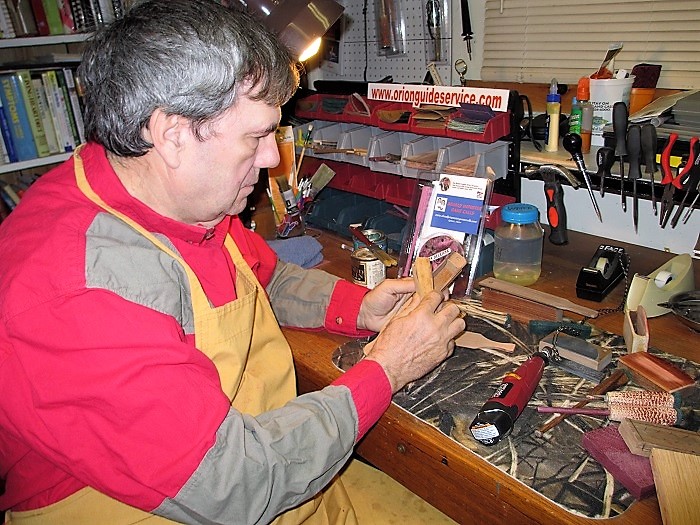
 Stu Bristol is a custom game callmaker living in southern Maine, building custom turkey deer and owl call for three decades. He is a widely published outdoor Writer . His features and columns have been published nationwide for more than 60 years.
Wild Turkey hunters are once again torn between not fall turkey hunting to keep populations high and learning that Maines five turkey, any sex limit offers five vey delicious one pot meals. Well, hunters are not hitched to the cooking pot, but those six to eight pounders, hen and jakes sure fit just right alongside some carrots, onions, potatoes, and a tomato or two. This is one of the few times hunters are encouraged to utilize the entire carcass and not just pop out the breast meat.
From where I sit as a long time turkeyholic and manager, the five turkey either sex limit is not necessarily a bad thing. Granted, some hunters feel the limit is way too liberal and will hurt the population while other complain that small birds taken from the flock will reduce the number of longbeards in the future.
Turkey biologists nationwide agree that the fall season is the proper time to reduce population numbers. Some of the southern and mid-west states have cut back on fall season because of population decreases. That said, none of the managers of those states have reported the decline was primarily due to over hunting.
At first I was on the fence about the five either sex limit but the extraordinary large number of turkeys especially in southern Maine, I feel the season for the next couple of years, at least is appropriate. I keep track of a number of turkey flocks year-round and I see larger broods and huge flocks going into the October season.
Back to the kitchen, my preferred method of utilizing fall hens and jakes is the crock pot. Rather than plucking feathers off the birds I simply skin them, remove entrails, feet neck and heads.
Once the bird has been dressed out I suggest two methods of cooking, both recipes using a large pot, or the handy crock pot. Wild Turkey stew is a family and friends favorite and requires one more step. Drop the bird(s) into boiling water for six or eight minutes to parboil. Let cool and pull all the meat from the bones, including the thighs and drumsticks.
Start with a quart of chicken or turkey broth (if you are sensitive to salt, look for the low sodium broth),which can be found in supermarkets. Add mushrooms, potatoes, carrots, celery and one can of diced tomatoes and a large can of turkey gravy. Do not add salt as the broth and gravy have plenty. Cut the turkey parts into bite-size pieces and add to the mix. Cover and cook on low heat from 8-10 hours. This is a great meal to start before work and eat for dinner meal later in the afternoon. Dinner rolls are an added bonus to soak up the gravy.
The second method of cooking fall turkeys in the crock pot is to clean the bird or birds. Usually only one whole carcass will fit in the average size pot. Place an apple in the body cavity then place the bird, breast up in the crock pot. Add a quart of chicken or turkey broth, some cut-up potatoes, carrots and one medium size tomato. Again, cook on low for 8-10 hours. Even the tough legs and thighs will fall off the bone tender.
Since the purpose of a liberal fall bag limit is to reduce the population, I target brood hens first and “turkey nuggets” second. For all you purists that shudder at the thought of shooting the young of the year, keep in mind how small a grouse, woodcock or quail is. They each weigh ounces compared to the brood of the year tipping the scales at between 6-12 pounds.
As always I insist upon “fair chase” hunts. It may seem easy pickings to find a flock and gun down your daily limit of two birds but I prefer scattering the flock then calling them back and selectively harvest.
The fall hunting season offers a bag of different species that each taste good. Squirrel, grouse, deer and woodcock hunters should bear in mind that us turkey chases are out there as well. Next to a vacuum sealer for preserving venison, the crock pot is second on my list of “must have” meal preparation items.
Stu Bristol is a custom game callmaker living in southern Maine, building custom turkey deer and owl call for three decades. He is a widely published outdoor Writer . His features and columns have been published nationwide for more than 60 years.
Wild Turkey hunters are once again torn between not fall turkey hunting to keep populations high and learning that Maines five turkey, any sex limit offers five vey delicious one pot meals. Well, hunters are not hitched to the cooking pot, but those six to eight pounders, hen and jakes sure fit just right alongside some carrots, onions, potatoes, and a tomato or two. This is one of the few times hunters are encouraged to utilize the entire carcass and not just pop out the breast meat.
From where I sit as a long time turkeyholic and manager, the five turkey either sex limit is not necessarily a bad thing. Granted, some hunters feel the limit is way too liberal and will hurt the population while other complain that small birds taken from the flock will reduce the number of longbeards in the future.
Turkey biologists nationwide agree that the fall season is the proper time to reduce population numbers. Some of the southern and mid-west states have cut back on fall season because of population decreases. That said, none of the managers of those states have reported the decline was primarily due to over hunting.
At first I was on the fence about the five either sex limit but the extraordinary large number of turkeys especially in southern Maine, I feel the season for the next couple of years, at least is appropriate. I keep track of a number of turkey flocks year-round and I see larger broods and huge flocks going into the October season.
Back to the kitchen, my preferred method of utilizing fall hens and jakes is the crock pot. Rather than plucking feathers off the birds I simply skin them, remove entrails, feet neck and heads.
Once the bird has been dressed out I suggest two methods of cooking, both recipes using a large pot, or the handy crock pot. Wild Turkey stew is a family and friends favorite and requires one more step. Drop the bird(s) into boiling water for six or eight minutes to parboil. Let cool and pull all the meat from the bones, including the thighs and drumsticks.
Start with a quart of chicken or turkey broth (if you are sensitive to salt, look for the low sodium broth),which can be found in supermarkets. Add mushrooms, potatoes, carrots, celery and one can of diced tomatoes and a large can of turkey gravy. Do not add salt as the broth and gravy have plenty. Cut the turkey parts into bite-size pieces and add to the mix. Cover and cook on low heat from 8-10 hours. This is a great meal to start before work and eat for dinner meal later in the afternoon. Dinner rolls are an added bonus to soak up the gravy.
The second method of cooking fall turkeys in the crock pot is to clean the bird or birds. Usually only one whole carcass will fit in the average size pot. Place an apple in the body cavity then place the bird, breast up in the crock pot. Add a quart of chicken or turkey broth, some cut-up potatoes, carrots and one medium size tomato. Again, cook on low for 8-10 hours. Even the tough legs and thighs will fall off the bone tender.
Since the purpose of a liberal fall bag limit is to reduce the population, I target brood hens first and “turkey nuggets” second. For all you purists that shudder at the thought of shooting the young of the year, keep in mind how small a grouse, woodcock or quail is. They each weigh ounces compared to the brood of the year tipping the scales at between 6-12 pounds.
As always I insist upon “fair chase” hunts. It may seem easy pickings to find a flock and gun down your daily limit of two birds but I prefer scattering the flock then calling them back and selectively harvest.
The fall hunting season offers a bag of different species that each taste good. Squirrel, grouse, deer and woodcock hunters should bear in mind that us turkey chases are out there as well. Next to a vacuum sealer for preserving venison, the crock pot is second on my list of “must have” meal preparation items.  BRISTOL’S WORLD –September 2023
It Was 55 years ago during the late winter of 1968 while working as a Vermont State Game Warden in southwestern Vermont. Neighboring game warden, Arnold Magoon and I met wildlife biologist, Bill Drake on a gravel road west of Lake Bomoseen, in Hubbardton. The back of Drake’s pickup was piled high with orange crates with feathers poking out through all the slats. It was then New England was introduced to wild turkey populations.
As, one-by-one we clamped leg tags on each bird an tossed them into the air. To this day I remember the words of biologist, Drake, “If this reintroduction takes hold your children and grandchildren will have the opportunity to hunt the largest big game bird in north America.” Those words had very little meaning to my 22-year old ears but as the years passed, I married, had children, grandchildren and now great grandchildren, truer words have never been spoken.
From two meager releases totaling 31 trapped in the wild turkeys relocated to suitable habitat the entire Northeast has been re-populated with wild turkeys. And, yes, my children, and grandchildren have enjoyed turkey hunting and we expect to pass on the sport to the next generation.
Over the years I have tutored hundreds of potential wild turkey hunters through my books, articles and in-person seminars. Still I get asked questions on how and why I continue to hunt wild turkeys and why I continue to hold the bird in such high esteem. Sit back and read on to enjoy my take on wild turkey hunting as I practice the sport.
Let me tell you right up front that I am a liar, a fake, I pretend to be something I am not; an “imposter” and that’s why my game call company and I share the same title, “Deadly Imposter.”
My company motto is “All hunters and anglers are play actors and the woods and waters our stage.”
As do others who hunt and fish, I assume dozens of roles each time I hit the woods or water. You may see me as a 214 pound man dressed like a bush but fish and game see or hear me as a variety of familiar sounds -until, that is – until too late.
Back when bass fishing tournament were a new sport it was unthinkable that a 5-pound bass could be caught then turned back into the water or at the same time why do fly anglers regularly admire fish then open the ne and watch it disappear back into the stream.
Deer hunters and yes, even wild turkey hunters have the same option. After all, we are the top of the food chain predator. We can admire the beauty of a strutting gobbler or th magnificence of a huge trophy whitetail but we can also understand that our challenge has been met and killing or harvesting as the new liberals would say has been accomplished. You can fill the freezer or let others enjoy the beauty you just witnessed. The choice is yours and mine. I don’t hunt or fish to show off and tell my friends, “Look what I got and you didn’t.” I hunt and fish for my own enjoyment, not to impress others.
A serious golfer doesn’t just want to beat the others in his foursome, he wants to bat the course; to avoid sand traps and water hazards and turn in the lowest score possible. With that in mind I see those who hunt and fish and others who are hunters and anglers.
If filling the frying pan is their goal, anyone can thread a worm on a hook and dop it into the water. It doesn’t take a lot of research to walk a logging road or sit at the edge of a meadow and kill a deer or turkey.
The serious hunter learns what the habitat holds, locates travel routes from sleeping to feeding and what and how to reproduce the many vocalizations that will aid in communication. Turkey hunters do likewise and read book, watch videos, attend seminars and get out into the wild and look for evidence of turkey populations.
Those who follow my writings already know I am a serious turkey hunter. In my first book I dubbed myself a “turkeyholic.” Every corner of my house is adorned with turkeys in one manner or another. Building turkey calls in my basement is now confined to when the family is not home. Over the years I have driven them crazy with turkey calling.
As a Master Maine Guide, I cater to both those who hunt and fish and serious hunters and anglers. Throughout the experience my clients grown to understand my personal philosophy and I believe I have mentors some of the best and brightest.
When I hunt alone I scout 365 days a year. I talk with farmers, rural mail delivery personnel, other hunters, and just about anyone and everyone that can help me pinpoint my prey.
On hunting days I am in the turkey woods hours before daybreak and I climb to a high vantage point and listen. As daylight creeps into the forest the birds start singing and chipmunk chirping and first the wild turkey hens begin their morning conversation with soft clucks and yelps barely audible at 30 yards.
Next, the young male turkeys begin to sound off; the jakes and 2-year-olds. They haven’t perfected their gobbling so they call time and again double and triple gobbling, each trying to outdo the other.
Then, if you did your homework and a mature longbeard is nearby you will hear its unmistakable gobble so loud the hair on the back of your neck stands up. At this point this 214-pound man dressed like a bush become “the deadly imposter.”
My plan is run off the hens first if that can be accomplished without flushing the longbeard. Most of the time I am so close the mere showing myself is enough for the hens to fly down and away. It they stay my job just became next to impossible.
With the hens out of the picture I assume the role of one of those hens, eager to breed with the mature gobbler. I stat with low clucks and yelps then simulate the hen flying down by flapping my hat against my thigh and sounding off with a fly-down cackle using my pot call or box.
After a short pause I increase the volume of my hen yelps and emit a more pleading tone. After all, it is the hens natural duty to go to the calling longbeard. Once again, the turkey is not dub. It can can the difference between a 7-pound hen turkey and a 214-pound man dressed like a bush.
So I turn away and call less frequently and in a different direction simulating a hen that is losing interest, hoping the longbeard will follow. This back and forth could be over quickly or could take hours. The challenge was never meant to an easy one.
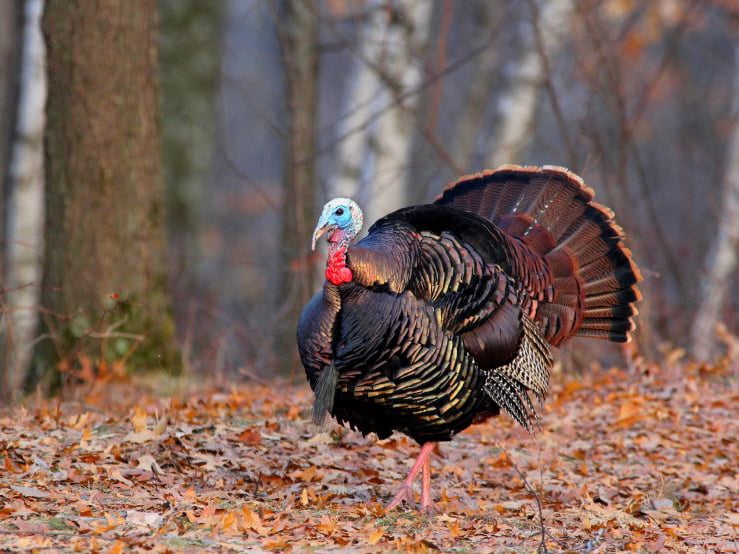
If all goes according to plan and my play acting has been successful, the gobbler will waddle into sight, well within killing range. His red, white and blue head is befitting of being dubbed an all-American treasure. Every feather on his body is quivering with excitement, his brad tailfan is something to behold, his body feather show off their iridescence in the sunlight.
Decision time for the successful hunter. His/her challenge has been fulfilled. Just as the serious angler opens his hands and lets the fish disappear back into the stream, the turkey huntr has a choice to sit back and enjoy the show or level the 12-gauge cannon loaded with 3-inch magnum shot and blow his head off and fill the freezer.
I never said I was a nice guy. I am the “Deadly Imposter.”
BRISTOL’S WORLD –September 2023
It Was 55 years ago during the late winter of 1968 while working as a Vermont State Game Warden in southwestern Vermont. Neighboring game warden, Arnold Magoon and I met wildlife biologist, Bill Drake on a gravel road west of Lake Bomoseen, in Hubbardton. The back of Drake’s pickup was piled high with orange crates with feathers poking out through all the slats. It was then New England was introduced to wild turkey populations.
As, one-by-one we clamped leg tags on each bird an tossed them into the air. To this day I remember the words of biologist, Drake, “If this reintroduction takes hold your children and grandchildren will have the opportunity to hunt the largest big game bird in north America.” Those words had very little meaning to my 22-year old ears but as the years passed, I married, had children, grandchildren and now great grandchildren, truer words have never been spoken.
From two meager releases totaling 31 trapped in the wild turkeys relocated to suitable habitat the entire Northeast has been re-populated with wild turkeys. And, yes, my children, and grandchildren have enjoyed turkey hunting and we expect to pass on the sport to the next generation.
Over the years I have tutored hundreds of potential wild turkey hunters through my books, articles and in-person seminars. Still I get asked questions on how and why I continue to hunt wild turkeys and why I continue to hold the bird in such high esteem. Sit back and read on to enjoy my take on wild turkey hunting as I practice the sport.
Let me tell you right up front that I am a liar, a fake, I pretend to be something I am not; an “imposter” and that’s why my game call company and I share the same title, “Deadly Imposter.”
My company motto is “All hunters and anglers are play actors and the woods and waters our stage.”
As do others who hunt and fish, I assume dozens of roles each time I hit the woods or water. You may see me as a 214 pound man dressed like a bush but fish and game see or hear me as a variety of familiar sounds -until, that is – until too late.
Back when bass fishing tournament were a new sport it was unthinkable that a 5-pound bass could be caught then turned back into the water or at the same time why do fly anglers regularly admire fish then open the ne and watch it disappear back into the stream.
Deer hunters and yes, even wild turkey hunters have the same option. After all, we are the top of the food chain predator. We can admire the beauty of a strutting gobbler or th magnificence of a huge trophy whitetail but we can also understand that our challenge has been met and killing or harvesting as the new liberals would say has been accomplished. You can fill the freezer or let others enjoy the beauty you just witnessed. The choice is yours and mine. I don’t hunt or fish to show off and tell my friends, “Look what I got and you didn’t.” I hunt and fish for my own enjoyment, not to impress others.
A serious golfer doesn’t just want to beat the others in his foursome, he wants to bat the course; to avoid sand traps and water hazards and turn in the lowest score possible. With that in mind I see those who hunt and fish and others who are hunters and anglers.
If filling the frying pan is their goal, anyone can thread a worm on a hook and dop it into the water. It doesn’t take a lot of research to walk a logging road or sit at the edge of a meadow and kill a deer or turkey.
The serious hunter learns what the habitat holds, locates travel routes from sleeping to feeding and what and how to reproduce the many vocalizations that will aid in communication. Turkey hunters do likewise and read book, watch videos, attend seminars and get out into the wild and look for evidence of turkey populations.
Those who follow my writings already know I am a serious turkey hunter. In my first book I dubbed myself a “turkeyholic.” Every corner of my house is adorned with turkeys in one manner or another. Building turkey calls in my basement is now confined to when the family is not home. Over the years I have driven them crazy with turkey calling.
As a Master Maine Guide, I cater to both those who hunt and fish and serious hunters and anglers. Throughout the experience my clients grown to understand my personal philosophy and I believe I have mentors some of the best and brightest.
When I hunt alone I scout 365 days a year. I talk with farmers, rural mail delivery personnel, other hunters, and just about anyone and everyone that can help me pinpoint my prey.
On hunting days I am in the turkey woods hours before daybreak and I climb to a high vantage point and listen. As daylight creeps into the forest the birds start singing and chipmunk chirping and first the wild turkey hens begin their morning conversation with soft clucks and yelps barely audible at 30 yards.
Next, the young male turkeys begin to sound off; the jakes and 2-year-olds. They haven’t perfected their gobbling so they call time and again double and triple gobbling, each trying to outdo the other.
Then, if you did your homework and a mature longbeard is nearby you will hear its unmistakable gobble so loud the hair on the back of your neck stands up. At this point this 214-pound man dressed like a bush become “the deadly imposter.”
My plan is run off the hens first if that can be accomplished without flushing the longbeard. Most of the time I am so close the mere showing myself is enough for the hens to fly down and away. It they stay my job just became next to impossible.
With the hens out of the picture I assume the role of one of those hens, eager to breed with the mature gobbler. I stat with low clucks and yelps then simulate the hen flying down by flapping my hat against my thigh and sounding off with a fly-down cackle using my pot call or box.
After a short pause I increase the volume of my hen yelps and emit a more pleading tone. After all, it is the hens natural duty to go to the calling longbeard. Once again, the turkey is not dub. It can can the difference between a 7-pound hen turkey and a 214-pound man dressed like a bush.
So I turn away and call less frequently and in a different direction simulating a hen that is losing interest, hoping the longbeard will follow. This back and forth could be over quickly or could take hours. The challenge was never meant to an easy one.
If all goes according to plan and my play acting has been successful, the gobbler will waddle into sight, well within killing range. His red, white and blue head is befitting of being dubbed an all-American treasure. Every feather on his body is quivering with excitement, his brad tailfan is something to behold, his body feather show off their iridescence in the sunlight.
Decision time for the successful hunter. His/her challenge has been fulfilled. Just as the serious angler opens his hands and lets the fish disappear back into the stream, the turkey huntr has a choice to sit back and enjoy the show or level the 12-gauge cannon loaded with 3-inch magnum shot and blow his head off and fill the freezer.
I never said I was a nice guy. I am the “Deadly Imposter.”