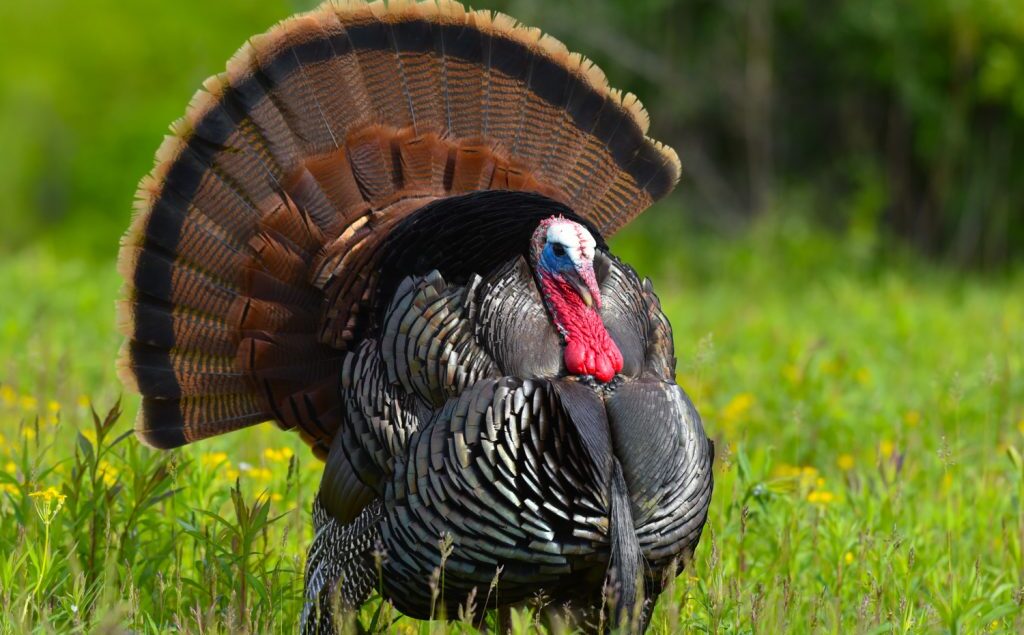
Anyone who has sat against an oak at dawn, heart pounding while a tom sounds off from the roost, knows the feeling: calling is the heart of turkey hunting. Unlike most other big game, a wild turkey will come to you if you speak his language well enough. Speak it poorly, or too much, and he’ll hang up out of range or walk the other way.
This guide covers the main types of calls, the core sounds every hunter should know, and the habits that separate hunters who fill tags from those who go home with a sore jaw and nothing else.
The Four Main Types of Turkey Calls
Box Calls
A box call makes sound when a paddle is stroked across the edge of a wooden box. It’s loud, easy to learn, and produces clean yelps, clucks and cuts with very little practice. That makes it a favorite for beginners and for covering ground when you need to reach a gobbler a long way off. The downside is movement: you need a free hand and a little room to work the paddle, and a wet box can go quiet. Keep it dry and chalk the lid before each hunt.
Friction (Slate and Pot) Calls
Friction calls use a striker, usually a wooden peg or carbon pin, dragged across a slate, glass, or aluminum surface. They are the most realistic-sounding option in skilled hands, with a wide range of tones from soft purrs to raspy hen yelps. They also take the most practice, and most don’t work well in rain unless you choose a weather-resistant surface. Many hunters carry a slate for close work when a bird is already responding.
Diaphragm (Mouth) Calls
A diaphragm is a small, horseshoe-shaped reed call that sits against the roof of your mouth. Because it’s hands-free, it lets you call while keeping your gun up and your body still, which is a major advantage when a tom is in close. It also allows the most natural variation, including raspy cuts and whining kee-kees. The learning curve is steep and many people fight the gag reflex at first, but the payoff is real. Start with a single- or double-reed call and work up to more complex combinations.
Locator Calls
Locators don’t imitate a hen. They provoke a shock gobble from a tom that you haven’t yet located. The classic is the barred owl hoot, but crow calls, coyote howlers and even a loud hawk screech can do the job. Use them at dawn or dusk when birds are roosted, or midday to pinpoint a tom’s position without revealing that a hunter is nearby.
The Essential Turkey Sounds
You don’t need a huge vocabulary. A handful of sounds will handle most situations.
- The yelp. A series of two-note calls, often described as “chee-awk.” It’s the basic hen call, used to say “I’m here” and to start a conversation. Vary the rhythm and pitch so you don’t sound like a machine.
- The cluck. A short, sharp single note. Clucks get a bird’s attention and can calm a tom that’s wary or unsure.
- The purr. A soft, rolling sound that signals contentment. Purring is deadly when a tom is close, since it tells him everything is relaxed and safe.
- The cut. A fast, excited series of clucks. Cutting suggests an eager hen and can fire up a gobbler that’s slow to respond, but save it for the right moments.
- The kee-kee. A high-pitched whistle-like call from young birds. The kee-kee run is a good choice in fall when you’re trying to regroup a scattered flock.
- The gobble. The male call itself. Gobbling on a tube or shaker can trigger a response from a dominant bird, though it may also attract other hunters, so use it carefully on public land.
Match the Situation, Not the Script
The most common mistake is calling too much. Real hens don’t yelp nonstop, and gobblers that hear constant calling can become suspicious or simply wait for the “hen” to come to them. A few simple principles help:
- Listen before you call. If a tom is gobbling eagerly and moving your way, a few soft calls may be all he needs.
- Mirror his mood. An aggressive tom may respond to louder, more urgent calling. A quiet, henned-up bird often needs soft purrs and clucks.
- Let silence work. Many toms come in silently. When a gobbler stops answering, he may be walking toward you, so stay alert and stay still.
- Move your volume with the distance. Start loud enough to be heard on the ridge, then dial it down as he closes in.
- Be ready to adjust. If a bird hangs up, try changing calls, changing your tone, or going quiet for a few minutes before trying again.
Practice Matters
A turkey call is a musical instrument with a very forgiving audience, but it still takes practice. Listen to recordings of real birds, then try to match them. Practice in the truck on the way to the woods, at home with the call’s rhythm and pauses, and anywhere you won’t annoy the neighbors. Remember that perfect sounds matter less than natural ones: real turkeys make mistakes, crack notes, and vary their pitch all the time.
Safety and Etiquette
Turkey calls sound like turkeys, and other hunters may be tempted to sneak toward the sound. Never stalk a sound, always identify your target, and sit with your back against a tree wider than your shoulders. Wear hunter orange when moving, and never wave or call out if you suspect another hunter is nearby. Check your state’s regulations, since seasons, calling rules and permitted methods vary widely.
Final Thoughts
Good turkey calling is less about owning the fanciest equipment and more about listening, patience, and restraint. Start with one reliable call, learn a handful of sounds, and put in the time in the woods. The thrill of a gobbler answering your yelp and strutting into range is worth every missed opportunity along the way.


